
How Often Does Your Business Need an EICR? A North East Guide to Electrical Compliance
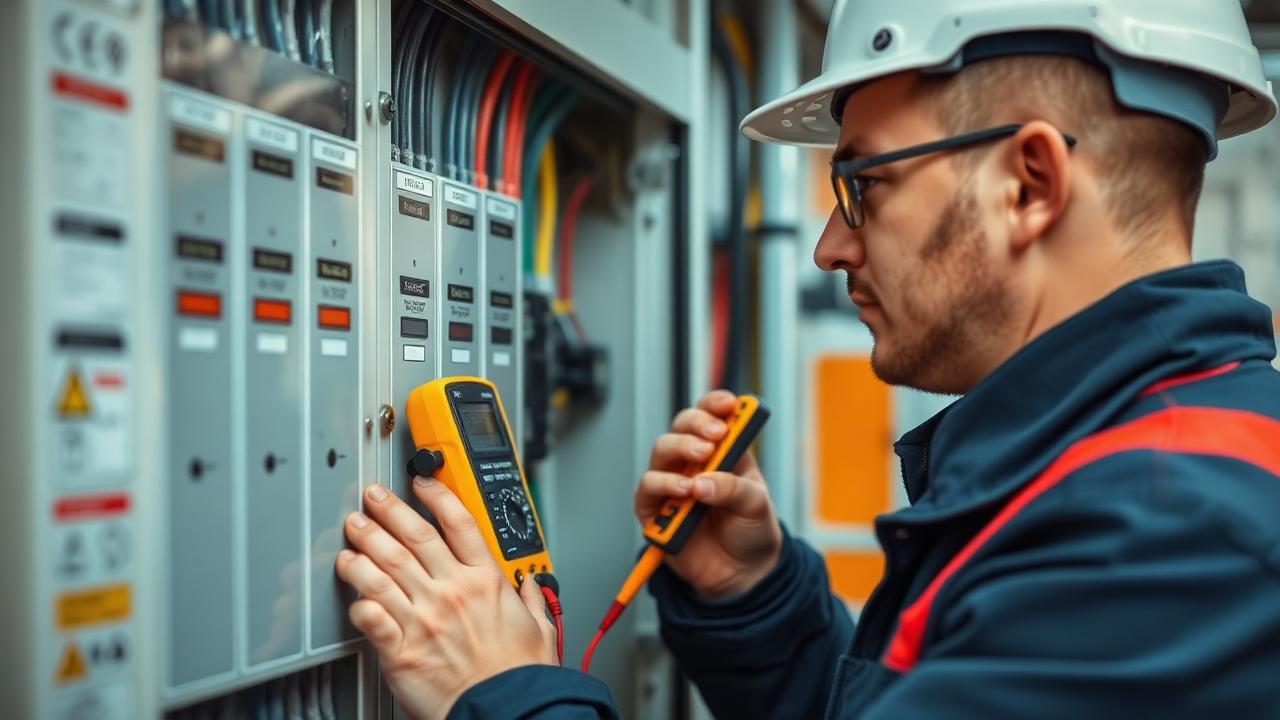
If you own or manage a commercial property in the North East, keeping on top of your electrical safety obligations is not optional. An Electrical Installation Condition Report (EICR) is one of the most important compliance documents your business needs, yet it is also one of the most commonly overlooked.
In this guide, we break down exactly what an EICR involves, how often your business needs one, what the results mean, and what can happen if you let it lapse.
What Is an EICR?
An EICR is a formal report produced by a qualified electrician after a thorough inspection and testing of a property's fixed electrical installation. That includes your wiring, consumer units, distribution boards, switches, sockets, and any permanently connected equipment.
The purpose is straightforward. It identifies any deterioration, defects, or non-compliance with current wiring regulations (BS 7671) that could present a risk of electric shock, fire, or injury.
An EICR is not the same as a PAT test. PAT testing covers portable appliances like kettles, monitors, and extension leads. An EICR covers the fixed wiring infrastructure of the building itself.
How Often Do You Need One?
The required frequency depends on the type of property and how it is used:
- Commercial premises should have an EICR carried out at least every 5 years. This applies to offices, retail units, warehouses, restaurants, salons, and any other business premises.
- Industrial installations typically require testing every 3 years due to the heavier demands placed on the electrical system by machinery, three-phase supplies, and high-load equipment. See our industrial electrical service.
- Rented properties (landlords) require an EICR at least every 5 years or at every change of tenancy, whichever comes first. Since the Electrical Safety Standards in the Private Rented Sector (England) Regulations 2020, this has been a legal requirement.
- Public buildings, hospitals, and swimming pools often need more frequent inspections, sometimes annually, depending on the specific use and risk profile.
If your last EICR recommended a shorter re-inspection interval due to the age or condition of the installation, that shorter period takes priority.
What Happens During an EICR Inspection?
A qualified electrician will carry out a combination of visual inspection and electrical testing across the installation. This typically includes checking the condition of wiring, accessories, and switchgear for signs of wear, damage, or overheating; testing circuits for correct polarity, earthing, insulation resistance, and fault loop impedance; verifying that protective devices such as circuit breakers and RCDs operate correctly; and identifying any alterations or additions that do not meet current standards.
Depending on the size and complexity of the installation, a commercial EICR can take anywhere from a few hours to a full day or more. A small office might be done in half a day, while a large warehouse or multi-storey building will take considerably longer.
Understanding the Results: Observation Codes
Once the inspection is complete, the electrician issues the report with an overall outcome of either Satisfactory or Unsatisfactory. Any issues found will be assigned an observation code:
- Code C1 (Danger Present): immediate risk of injury or fire. Urgent action required; the electrician may need to isolate the affected circuit on the spot.
- Code C2 (Potentially Dangerous): a serious defect that is not immediately dangerous but could become so. Remedial work should be carried out as soon as possible.
- Code C3 (Improvement Recommended): the installation does not fully meet the current edition of the wiring regulations but is not dangerous.
- Code FI (Further Investigation Required): the electrician has identified something that could not be fully assessed during the inspection.
If any C1 or C2 codes are present, the overall result will be Unsatisfactory and remedial work is required, our testing and maintenance team can handle this and reissue a clean certificate.
What Happens If You Do Not Have a Valid EICR?
For landlords, the consequences are clear. Failing to have a valid EICR can result in fines of up to £30,000 per breach, and local authorities can arrange for the work to be done and recover costs from you.
For commercial property owners and tenants, the legal position depends on your insurance policy, your lease obligations, and your duty of care under the Health and Safety at Work Act 1974 and the Electricity at Work Regulations 1989. In practice, most commercial insurance policies require evidence of current electrical testing. If a fire or electrical incident occurs and you cannot produce a valid EICR, your insurer may refuse the claim.
Beyond the legal and financial risks, faulty wiring remains one of the leading causes of commercial fires in the UK. A periodic EICR is one of the most cost-effective ways to protect your staff, your customers, and your business.
When Should You Book Yours?
Get in touch sooner rather than later if any of the following apply:
- Your last EICR was more than 5 years ago (or 3 years for industrial premises).
- You have recently taken on a new commercial lease.
- You have had electrical work carried out since your last inspection.
- You are a landlord with a change of tenancy coming up.
- You have noticed tripping breakers, flickering lights, burning smells, or discoloured sockets.
Book Your EICR With LC Electrical Services
LC Electrical Services carries out EICR inspections for commercial and industrial premises across South Tyneside, Newcastle, Sunderland, Gateshead and the wider North East. With over 20 years of experience and NAPIT accreditation, we deliver thorough, regulation-compliant reports with clear guidance on any remedial work required.
Whether you need a routine periodic inspection or an urgent assessment, get in touch today to book your EICR.