
Commercial PAT Testing
Portable appliance testing for offices, retail, industrial and educational premises, giving you a clear, documented record of appliance safety.
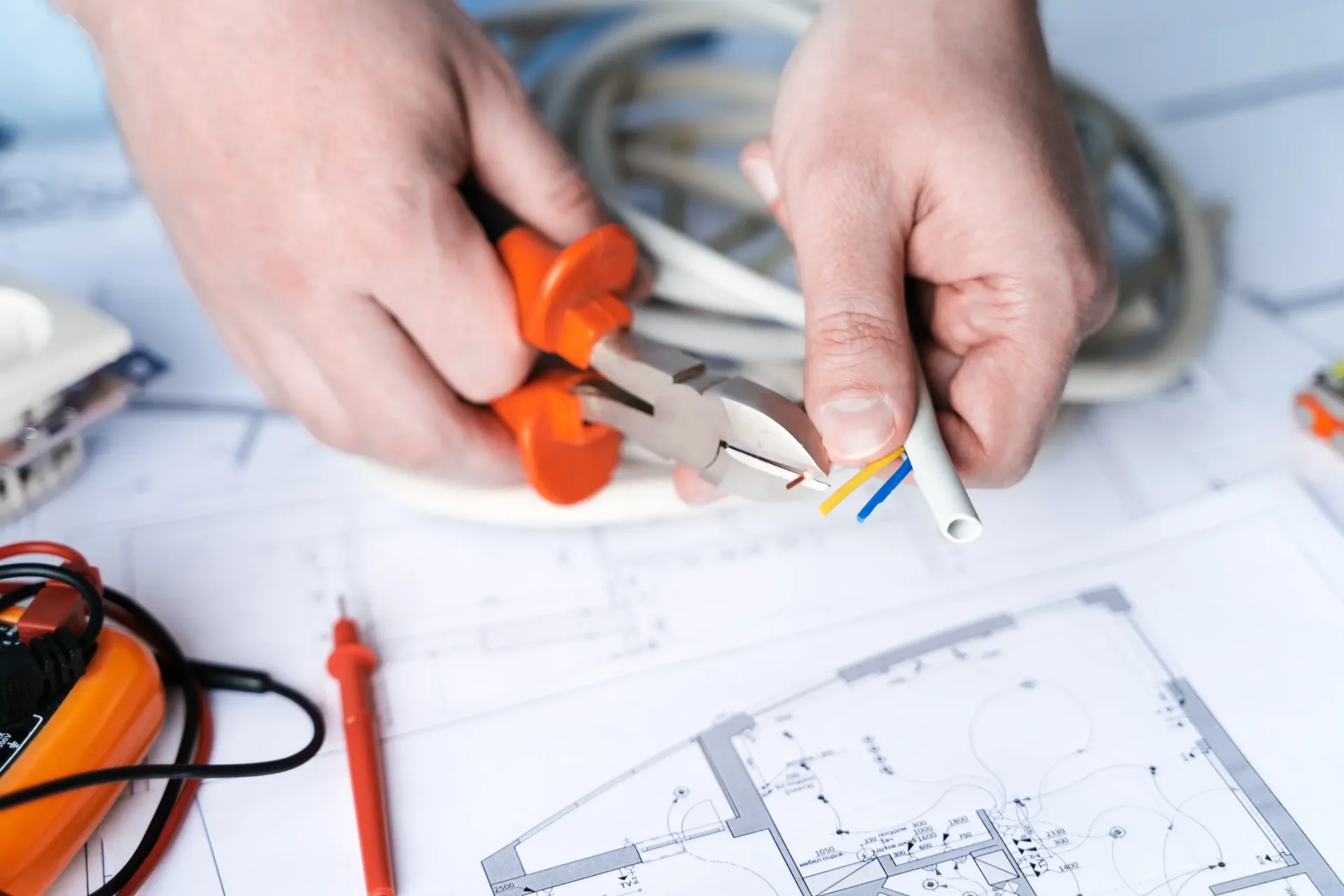
Portable Appliance Testing, usually shortened to PAT testing, is the process of inspecting and testing electrical appliances and equipment that are not part of the fixed wiring installation to confirm they are safe to continue in use. This covers anything from kettles, monitors and desk lamps in an office through to power tools, extension leads and portable machinery on an industrial site. It sits alongside, but is separate from, fixed wire testing and an Electrical Installation Condition Report, which deal with the building's permanent wiring rather than the equipment plugged into it.
Our engineers carry out a visual inspection of every item first, checking the plug, flex, casing and connections for obvious damage, before carrying out the appropriate electrical tests for that class of equipment. This typically includes earth continuity testing on Class I equipment, insulation resistance testing, and a functional check to confirm the appliance operates as intended. Where an appliance fails, it is removed from service, clearly labelled, and reported to you so a decision can be made on repair or replacement.
This service is for any commercial or industrial organisation with electrical equipment in regular use, including offices, retail units, warehouses, workshops, schools, care settings, hospitality premises and manufacturing facilities. It is particularly relevant where equipment is used by staff, contractors or members of the public, where insurers or landlords require evidence of a maintenance regime, or where equipment is hired out, moved between sites, or subjected to harsh working conditions.
There is a common misconception that PAT testing is a specific legal requirement with a fixed annual interval. It is not. The Electricity at Work Regulations 1989 require employers to maintain electrical equipment so far as reasonably practicable to prevent danger, but the Regulations do not prescribe PAT testing by name or set a mandatory frequency. The Health and Safety Executive and the IET Code of Practice for In-Service Inspection and Testing of Electrical Equipment both support a risk-based approach, where the type of equipment, its environment and how it is used determine how often it needs to be tested.
In practice, this means a handheld power tool used daily on a construction or engineering site will need far more frequent attention than a desktop monitor in a quiet office environment. Equipment that is moved regularly, used outdoors, or exposed to dust, moisture or physical knocks carries a higher risk of developing faults and is tested more often. Low-risk, rarely moved equipment in a benign office setting can often be tested at longer intervals, provided it is also subject to routine visual checks by staff or management in between formal tests.
We help clients set a sensible, defensible testing frequency for their premises rather than defaulting to a blanket annual cycle that may be unnecessary for some equipment and insufficient for other items on the same site. This is assessed during our initial visit, where we look at the type, age and usage pattern of your equipment, the environment it operates in, and any specific insurer or industry requirements that apply to your sector.
Every item tested is given a unique reference and recorded on an asset register, which lists the appliance, its location, test date, result and next recommended test date. This register becomes a working management tool rather than a static document. It allows you to track the condition of your equipment over time, identify items that fail repeatedly and may need replacing rather than repairing, and demonstrate to an auditor, insurer or enforcing authority exactly what has been tested and when.
Every appliance that passes testing is fitted with a tamper-resistant label showing the test date and the date the next test is due. This gives staff, contractors and visiting inspectors an immediate visual indication that an item has been checked and is within its test period, without needing to consult the full asset register for routine reassurance.
On completion of testing we issue a full test certificate summarising the results, alongside the updated asset register and a schedule of any items that failed and require attention. Where appliances need repair, we can advise on whether this is economical or whether replacement is the better option, and we can retest repaired items once work has been completed.
PAT testing works particularly well when it is carried out alongside an Electrical Installation Condition Report. Both exercises involve an engineer attending site, and combining them into a single visit reduces disruption to your operation and often represents better value than arranging two separate attendances. Where we are already on site completing fixed wire testing, we can test portable appliances in the same visit and issue both sets of certification together, giving you a complete, aligned picture of both the fixed installation and the equipment connected to it.
We also support organisations that need PAT testing as part of a wider planned maintenance programme, where appliances are tested on a rolling basis throughout the year rather than all at once, helping to spread cost and minimise the number of items taken out of service at any one time. This approach suits larger sites, multi-site operators and businesses with equipment that cannot all be made unavailable simultaneously.
Our engineers are experienced in testing equipment across a wide range of commercial and industrial environments, from standard office IT and catering equipment through to specialist machinery, workshop tools and equipment used in educational and training settings. All testing is carried out using calibrated UKAS accredited test equipment, and our engineers hold the relevant qualifications to carry out in-service inspection and testing competently and in line with current guidance.
As a NICEIC approved contractor and NAPIT registered business, our certification and reporting are recognised and accepted by insurers, landlords, auditors and enforcing authorities, giving you confidence that the paperwork you hold will stand up to scrutiny if it is ever challenged following an incident or during a routine compliance check.
We understand that portable appliance testing needs to fit around your operation, not the other way round. During the initial survey we discuss your working hours, any areas of the site with restricted access, and whether testing needs to be phased to keep critical equipment available. Wherever possible we schedule testing to minimise downtime, including out-of-hours attendance for sites that cannot pause operations during the working day.
We provide commercial PAT testing across South Tyneside, Newcastle, Gateshead, Sunderland, North Tyneside and the wider North East, supporting businesses that need a properly documented, risk-based testing regime for their portable electrical equipment, whether that stands alone or forms part of a combined inspection alongside an EICR.
Bay Plastics: combined EICR and appliance testing
Fixed wire testing and portable appliance testing carried out together at this North Shields manufacturing site, giving a complete asset register alongside updated fixed installation certification.
Read the full case studyWelding Engineers: equipment and installation testing
Testing of workshop power tools and portable equipment alongside the wider remedial electrical works at this Boldon engineering firm, with a full asset register established for ongoing management.
Read the full case studySouth Tyneside MOST Centre: asset register setup
A new asset register and risk-based testing schedule established for portable equipment at this training centre, aligned with the site's EICR remediation programme.
Read the full case studyWe provide commercial PAT testing across South Tyneside, Newcastle, Gateshead, Sunderland, and the wider North East region.
When You Need PAT Testing
- Insurance or landlord requirements for equipment testing
- No existing asset register for portable equipment
- Equipment used by staff, contractors or the public
- Hired, moved or heavily used equipment
- Combining PAT testing with a scheduled EICR
- Planned, rolling testing across multiple sites
What's Included
- Visual inspection and electrical testing of appliances
- Risk-based testing frequency advice, not a fixed interval
- Pass/fail labelling with next test date
- Full asset register of all tested items
- Test certificate on completion
- Option to combine with EICR fixed wire testing
Sectors We Work In
Accredited By




Work Certified to Current UK Regulations
BS 7671 (18th Edition)
All installations designed, installed and tested to the latest IET wiring regulations.
Electricity at Work Regs 1989
Duty-holder compliance for fixed wiring, periodic inspection and PAT testing.
Regulatory Reform (Fire Safety) Order 2005
Emergency lighting & fire alarm systems installed and certified to BS 5266 / BS 5839.
Building Regulations Part P
Notifiable works registered through our NICEIC competent person scheme.
"Came promptly, returned at the time stated, did exactly what they said, and charged what they quoted. Good old school customer service."
Mark Robertson· Verified Google review
Frequently Asked Questions
Areas We Cover for Commercial PAT Testing
Delivered across the North East, including Sunderland, Newcastle, Gateshead and surrounding towns.
Ready to Discuss Your Project?
Get in touch for a detailed quote. Commercial and industrial electrical services across the North East.