
Darker Nights: Emergency Lighting Checks Every Business Should Do Before Winter
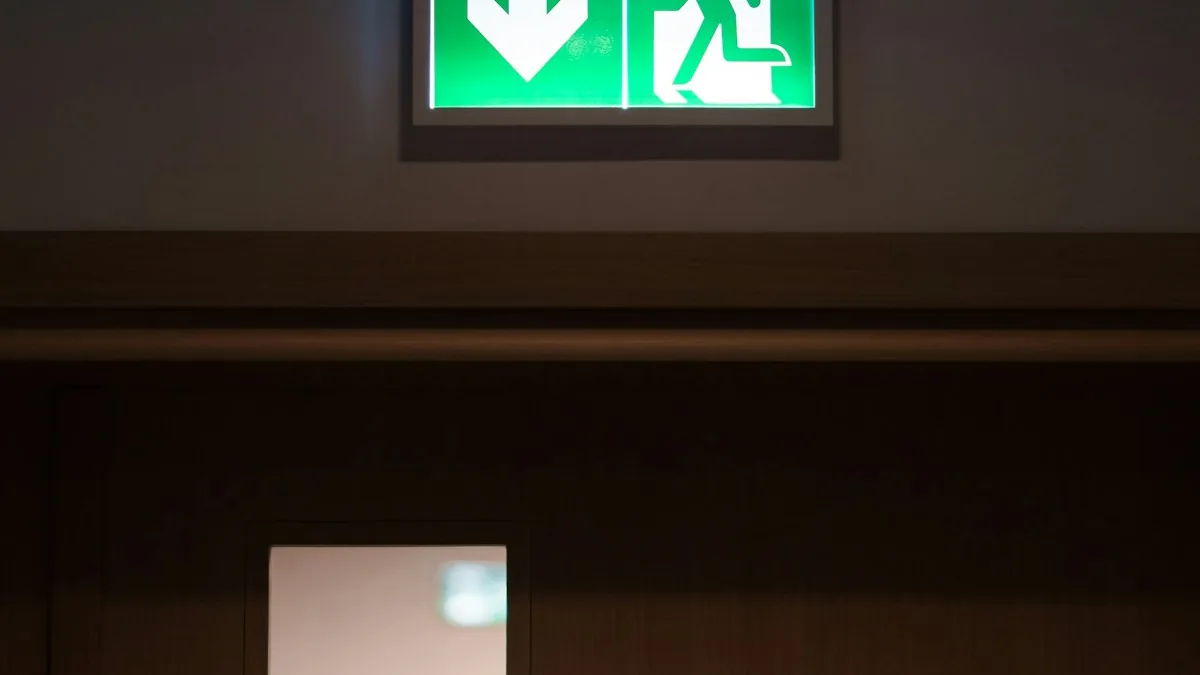
In June, a power cut at four in the afternoon is an inconvenience. In December, the same power cut leaves a building in genuine darkness, with staff and customers trying to find stairwells, corridors and exits they may not use every day. That is the difference winter makes, and it is why emergency lighting deserves attention in September rather than after the first failure.
Emergency lighting is also one of the easiest compliance duties to let slip, because the fittings look perfectly healthy until the day they are actually needed. A green maintained sign glowing in a corridor tells you the mains supply is on. It tells you nothing about the battery behind it.
What the Standard Actually Requires
Emergency lighting in commercial premises is designed, installed and maintained to BS 5266. The maintenance regime has two main elements:
- Monthly function test. Each luminaire is switched into emergency mode briefly to confirm the lamp illuminates and the charging indicator is working. Results go in the log book.
- Annual duration test. The system is run on battery for its full rated duration, normally three hours, to confirm each fitting still holds up for the whole period. Anything that dims or drops out early is recorded and put right.
Alongside this, the Regulatory Reform (Fire Safety) Order 2005 places the duty on the responsible person to keep escape routes adequately illuminated. The log book is the evidence that the duty is being met, and it is the first thing a fire officer or insurer will ask to see.
Why Winter Exposes Weak Systems
Several things line up against emergency lighting in the colder months. Occupied hours in darkness rise sharply, so a failure is far more likely to happen when the building genuinely needs the system. Cold plant rooms, loading bays and external escape routes are harder on batteries than heated office space. And winter storms bring the supply interruptions that put the system to work in the first place.
Battery degradation is gradual. A nickel cadmium or lithium pack that was fine two winters ago may now manage forty minutes rather than three hours. Nothing in the daily appearance of the fitting reveals that, which is precisely what the annual duration test exists to catch.
The Checks Worth Doing Now
Before the clocks change, it is worth walking the building with the layout drawing and confirming the basics:
- Every final exit, escape route, stairwell, corridor and change of level is covered.
- Fittings still illuminate the areas they were installed for, rather than being blocked by new racking, partitions, signage or stock.
- Exit signage is visible from the direction people will actually travel, and matches current pictogram signage rather than older text only signs.
- Open areas over sixty square metres have anti panic lighting, and high risk task areas such as workshops and plant rooms are covered.
- External areas immediately outside final exits are lit, not just the door itself.
- The log book is present, complete and up to date.
Any layout change since the system was installed is a trigger for reassessment. Retail units that have refitted, warehouses that have added mezzanines or racking, and offices that have been reconfigured very often have coverage gaps nobody has formally recorded.
Remedials: Repair or Upgrade
When duration testing shows failures, there is usually a choice between replacing battery packs in existing fittings or upgrading the affected areas to modern LED emergency luminaires. On older installations with a high failure rate, upgrading tends to work out better value: current fittings draw less power, have longer service lives and are easier to test.
Self test and addressable systems are also worth considering on larger or multi storey sites. They carry out the function and duration tests automatically and report failures, which removes a substantial amount of manual testing time and produces a far more reliable record. If you are already planning an LED lighting upgrade, doing the emergency lighting at the same time avoids paying twice for access equipment and out of hours working.
Booking It Around Your Operation
Duration testing leaves a building on battery supply, so it is rarely something to run in the middle of a trading day. We schedule testing for retail, hospitality and education clients out of hours or during closure periods, and split larger sites into zones so that no area is ever left without cover. Certification and an updated log book are issued on completion.
Arrange Your Testing
LC Electrical Services NE Ltd carries out emergency lighting testing, certification and remedial works for commercial premises across South Shields, Newcastle, Hebburn and the wider North East, alongside fire alarm servicing and EICR testing.
Contact the team to get your annual duration test booked in before the dark evenings arrive.