
Getting Commercial Premises Winter Ready: An Electrical Checklist for North East Businesses
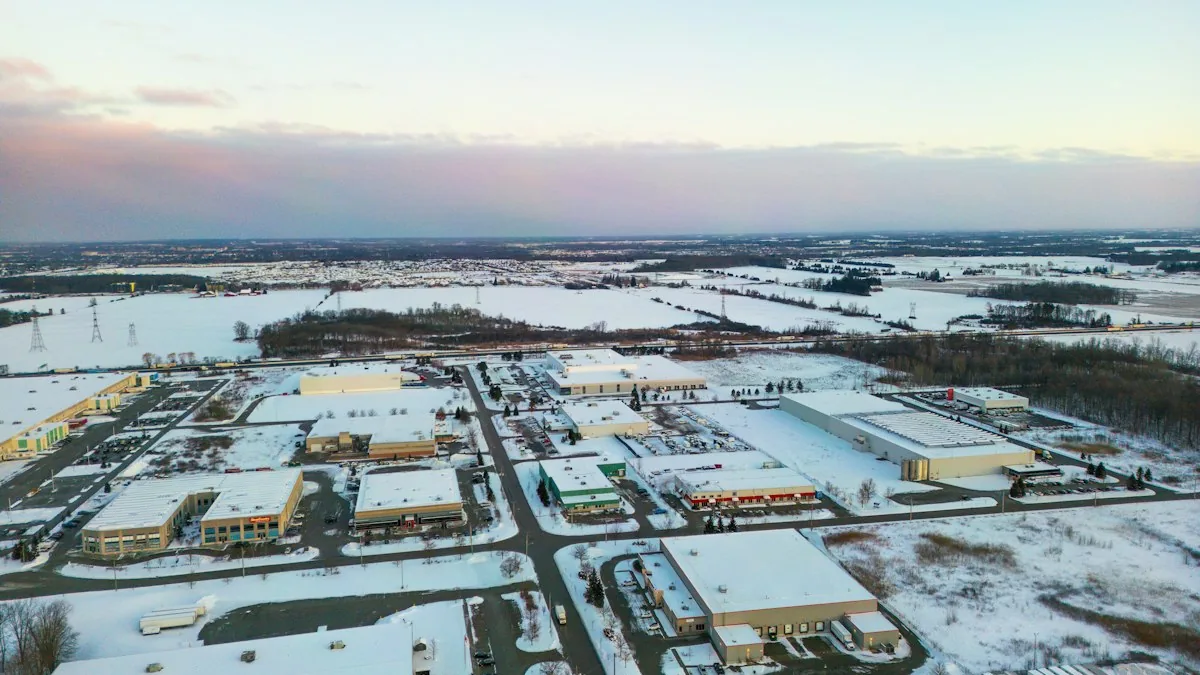
Autumn is the quietest that winter will ever be for a facilities team. Once the clocks go back and the first cold snap arrives, every weakness in a commercial electrical installation tends to show itself at the worst possible moment: a car park in darkness at half past four, a heater tripping a board on the coldest morning of the year, or a shop unit losing power on a Saturday in December.
Most of it is avoidable. The work below takes a few planned visits in September and October rather than a series of emergency callouts between November and February. Here is the checklist we work through with commercial and industrial clients across the North East before the cold months set in.
1. Check the Age and Status of Your EICR
An Electrical Installation Condition Report is the backbone of everything else. If yours is due, or if you cannot lay your hands on the certificate, book it before winter loads arrive rather than after something has already failed. Commercial premises are typically inspected every five years, industrial premises every three, with shorter intervals for higher risk environments.
The report will pick up deteriorated cabling, loose terminations, overloaded circuits and missing protective devices. Those are exactly the faults that cold weather, damp and increased heating load push over the edge. Our commercial EICR service includes a clear schedule of any remedial work, priced so you can plan it rather than react to it.
2. Inspect External and Car Park Lighting
Between late October and February, staff and customers will arrive and leave in the dark. External lighting stops being a nicety and becomes a safety and security issue. Walk the site after dark and note anything that is out, flickering, pointing the wrong way or leaving a black spot across a footpath, loading bay or stairwell.
Older external fittings are frequently the worst energy offenders on a site because they run for the longest hours. Replacing bulkheads, floodlights and column heads with LED equivalents and adding photocell or timed control usually pays for itself quickly over a winter, and it removes the lamp changes that come with older fittings. See our LED lighting upgrade service for how that work is surveyed and costed.
3. Test Emergency Lighting Properly
Darker afternoons mean that a power failure is far more likely to leave a building genuinely dark. Emergency lighting to BS 5266 needs a monthly function test and an annual full duration test, with results recorded in a log book. Batteries degrade quietly, so a fitting that illuminates for two seconds during a flick test may not hold up for the three hours it is supposed to.
If your log book has gaps, winter is the wrong season to leave them there. Our emergency lighting testing service covers duration testing, certification and any remedial replacement.
4. Review Heating Loads and Distribution Boards
Cold weather changes the electrical profile of a building. Fan heaters appear under desks, warehouse space heaters get switched back on, door curtains run all day and frost protection comes into play on external plant. That extra load lands on circuits that coped perfectly well all summer.
Before it happens, it is worth confirming that heating equipment is on suitably rated and protected circuits rather than extension leads, that distribution boards are not already running close to capacity, and that nuisance tripping from earlier in the year has actually been diagnosed rather than simply reset. Where a site has genuinely outgrown its supply, a commercial installation upgrade is a planned project in autumn and an expensive emergency in January.
5. Look at Water Ingress and External Equipment
Wind driven rain along the coast at South Shields and Whitburn, and the wet weather that comes with it inland, finds any weakness in external electrical equipment. Check that outdoor enclosures, isolators, sockets and junction boxes still have intact seals and glands, that covers are closed and secured, and that nothing has been left unprotected after summer works.
Also worth checking: gutters and roof penetrations above plant rooms and distribution equipment. A slow leak over a board causes far more damage and downtime than the repair would have cost.
6. Confirm Your Fire Alarm Servicing Is Current
Heating equipment, festive displays in retail and hospitality, and longer occupied hours in the dark all raise the stakes on fire detection. Systems installed to BS 5839-1 need servicing at appropriate intervals with weekly call point testing recorded. Our fire alarm installation and servicing team can pick up existing systems as well as install new ones.
7. Know Who You Are Calling at 7am on a Monday
When a business loses power, the time lost is usually spent finding someone rather than fixing the fault. Agreeing a response arrangement in advance, with a contractor who already holds drawings, test results and board schedules for your site, removes most of that delay. That is the main practical value of a planned maintenance contract: the routine testing happens on schedule, and the emergency number is already in the right hands.
Book Your Pre Winter Checks
LC Electrical Services NE Ltd carries out pre winter electrical inspections, remedial works and lighting upgrades for commercial and industrial premises across South Tyneside, Sunderland, Gateshead and Newcastle. Work is certified, itemised and scheduled around your operating hours wherever possible.
Get in touch to arrange a site survey before the darker months arrive.