
Winter Power Resilience: Keeping Industrial Sites Running Through the Cold Months
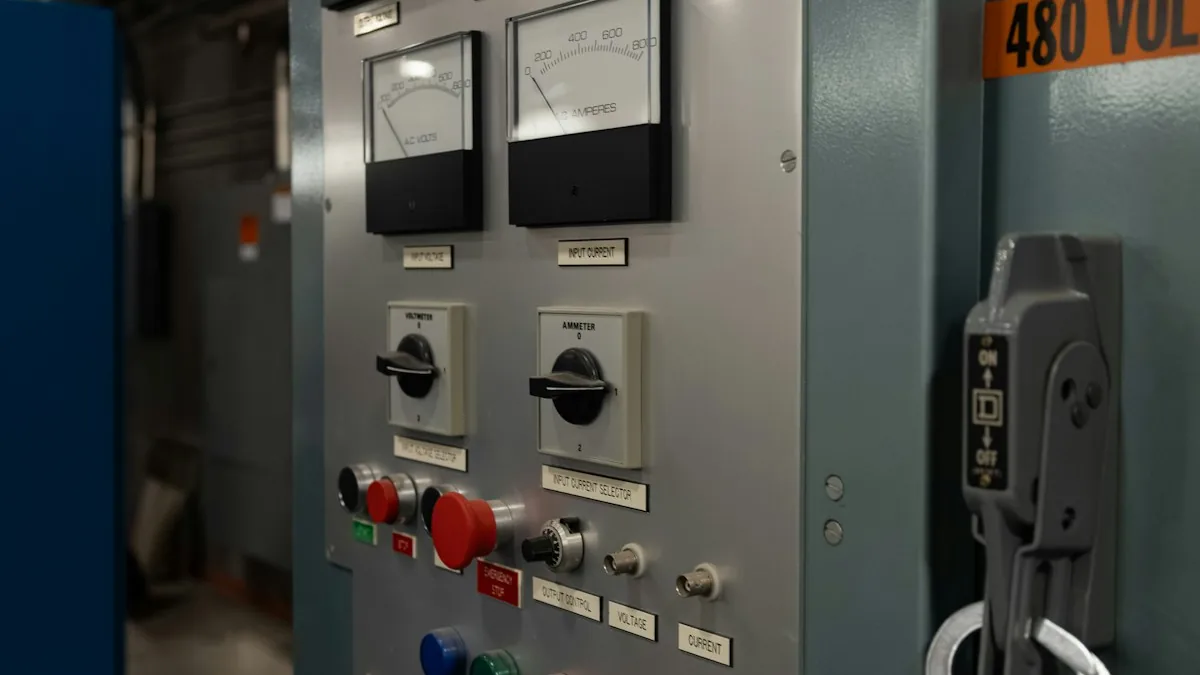
For a manufacturing, logistics or engineering site, an hour of lost power in December is not the same as an hour lost in July. Order books are usually at their fullest, weather makes recovery slower, and the fault that caused it is more likely to be something that has been quietly worsening for months.
Winter resilience on an industrial site is mostly about headroom and early detection: knowing that the installation can carry the seasonal load, and finding the deteriorating connection before it becomes a burnt out board. Here is how we approach it with clients on estates such as Team Valley, Boldon Business Park, Hebburn and Washington.
Seasonal Load Is Not the Same Load
Cold weather adds a substantial and often undocumented load to an industrial installation. Space heating in workshops and warehouses, air curtains on loading doors, frost protection and trace heating on external pipework, longer lighting hours, and compressors and motors working harder against low ambient temperatures all draw current that simply is not there in summer.
The problem is rarely the total capacity of the supply. It is usually distribution: one board, one submain or one distribution circuit that is already close to its limit and tips over once the heaters come on. A load assessment carried out in autumn, with measurements taken at the boards rather than estimates from a schedule, identifies which parts of the installation have no headroom left before winter proves it.
Where Three Phase Capacity Becomes the Constraint
Sites that have grown steadily, added machinery, expanded a workshop or installed charging for fleet vehicles frequently reach a point where the existing supply cannot take another significant load. The warning signs are familiar: lights dipping when large motors start, breakers tripping under combined load, or a refusal to sanction new equipment because nobody is confident the supply will take it.
Where an upgrade is needed, the lead time matters more than the work itself. Applications to the distribution network operator take time, and winter is the worst period to be waiting on one. Our industrial electrical team carries out the load assessment, handles the application and phases the installation work around production. The detail is covered in our guide to three phase power upgrades.
Thermal Imaging: Finding Faults Before They Stop Production
Most catastrophic switchgear failures give warning in the form of heat. A loose or corroded termination, an overloaded busbar or a failing contactor runs hotter than its neighbours long before it fails outright. A thermal survey carried out under normal running load identifies those hot spots without any interruption to production, and the findings can be prioritised into a repair schedule.
On a site running continuous shifts, this is one of the highest value checks available, because it converts an unplanned stoppage into a planned ten minute isolation during a shift change.
Storm Resilience and External Equipment
North East winters bring wind and driven rain, and coastal sites take the worst of it. The electrical items that suffer are predictable: external isolators and enclosures with perished seals, cable glands that have worked loose, damaged containment on exposed elevations, external lighting columns and the supplies feeding gatehouses, barriers and yard equipment.
Water and vibration damage found in September is a maintenance job. The same damage found in a January storm is an emergency callout, often with a section of the site out of use while it is made safe. Surface water is worth considering too: substations, plant rooms and ground level distribution equipment in areas prone to pooling need checking before the wet season rather than during it.
Standby Supplies and Safe Shutdown
Not every site needs a generator, but every site should know what happens when the power goes. Which processes stop safely and which need a controlled shutdown, what the restart sequence is, whether the fire alarm and emergency lighting hold up, and who is authorised to isolate and re energise. Where standby generation or uninterruptible supplies are installed, they need testing on load, not just started up and left to idle.
Writing that sequence down and testing it once before winter is a short exercise that saves hours of confusion during an actual outage.
Keeping the Paperwork Current
Industrial installations are typically inspected every three years, with more frequent checks on higher risk areas. Fixed wire testing, portable appliance testing on site tools, machinery safety checks and up to date board schedules are what allow a contractor to respond quickly when something does fail. An engineer who already has the drawings and the last set of test results diagnoses a fault far faster than one starting from scratch.
That is the practical case for a planned maintenance contract: scheduled inspection, a known priority list of remedials, and a callout arrangement that does not begin with a search for a contractor.
Plan It Before the Cold Arrives
LC Electrical Services NE Ltd supports industrial and manufacturing sites across Gateshead, Washington, Jarrow and the wider North East with load assessments, distribution upgrades, thermal surveys and planned maintenance. Recent work includes projects such as our welding engineers installation and Bay Plastics.
Get in touch to book a pre winter site assessment and an itemised schedule of works.